
How to Make Juicy Sea Bream Fillets in Foil with Cherry Tomatoes and Taggiasca Olives: The Ultimate 10-Minute Mediterranean Recipe
If there is a seafood main course capable of saving dinner at the last minute while combining lightness with extraordinary flavor, it is undoubtedly the sea bream fillet en papillote.
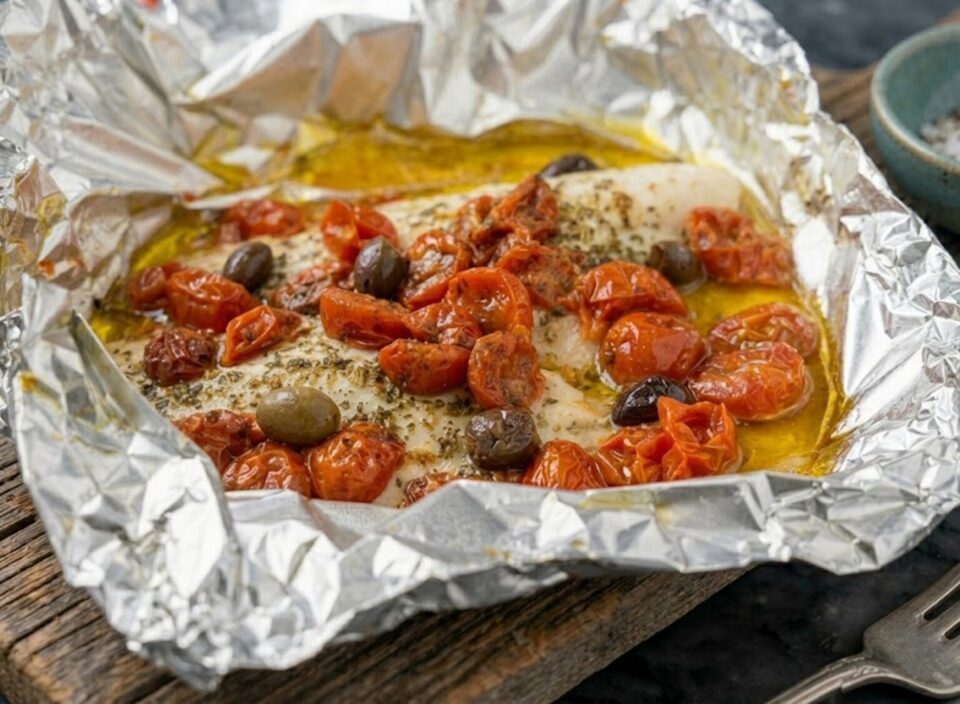
But what exactly is it? It’s an ancient and formidable cooking method in which the fish is enclosed in a sealed wrapper along with fresh cherry tomatoes, aromatics, and olives, cooking practically in its own steam and juices.
Yet, when you try to bake fish at home, you often run into that annoying little drawback: the fillet dries out completely, becoming stringy and tasteless, or the skin sticks to the baking dish.
This is normal and simply happens because the fish is exposed directly to the dry heat of the oven without a protective seal to trap its natural moisture.
The wonderful news is that you don’t need magic to bring a juicy, melt-in-your-mouth fish rich in flavorful juices to the table; you just need to master the art of the cartoccio (en papillote). In this version, the delicate flavor of sea bream is enhanced by the aroma of parsley, the sweetness of cherry tomatoes, and the savory kick of Taggiasca olives.
It takes just 10 minutes of prep and another 10 minutes of cooking to serve a show-stopping, elegant dish that guarantees success, even for beginners. Let’s prep the aluminum foil and discover how easy it is to make it to perfection!
Ingredients
Tools
Instructions Step-by-Step
1. Cleaning the Fish and Prepping Aromatics
If your fishmonger hasn’t already done so, check with tweezers to ensure the sea bream fillets are completely free of bones and scales. Rinse them quickly under cold water and pat them dry gently with paper towels. On a cutting board, wash the cherry tomatoes and cut them into halves or quarters depending on their size, then finely chop a bunch of fresh parsley.
2. Preparing the Mediterranean Seasoning
Gather the chopped cherry tomatoes in a large bowl. Add the well-drained Taggiasca olives, the chopped parsley, and a pinch of garlic powder (or a minced clove if you prefer). Season the mixture by pouring in the 50 ml of dry white wine, a generous drizzle of extra virgin olive oil, and a hearty dusting of fine salt. Mix well to meld the flavors together.
3. Assembling and Sealing the Packets (Papillote)
Preheat your static oven to 400°F (200°C). Cut two large sheets of aluminum foil (or parchment paper) and place them over a baking dish. Lay two sea bream fillets inside the center of each sheet, positioning them with the inside (flesh side) facing upward. Distribute the tomato and olive mixture evenly over the fish, drizzling any remaining liquid left in the bowl over top. Fold the edges of the foil and seal the borders tightly to prevent any steam from escaping.
4. Baking, Resting, and Serving
Bake the dish in the preheated oven at 400°F (200°C) for exactly 10 minutes. Once cooked, remove the fish from the oven and let it rest sealed inside its foil packet for a minute so the juices redistribute back into the meat. Carefully transfer each packet directly to a serving plate, open it only in front of your guests while watching out for hot steam, and serve immediately.
Ingredient Notes & Substitutions
The Fish:
I used ready-to-cook sea bream fillets, which make the recipe ultra-fast. If you aren’t confident fileting fish yourself, ask your trusted fishmonger to do it.
Alternatively, you can use thawed frozen sea bream fillets (completely defrosted in the fridge first), sea bass (branzino or spigola), or cod (merluzzo). If you prefer using a whole gutted fish, remember to extend the cooking time to about 20–25 minutes depending on size.
The Olives:
Taggiasca olives provide that typical Ligurian touch and unmistakable savory flavor. If you don’t have them on hand, you can substitute them with good pitted black olives or sliced green olives.
The Aromatics:
Fresh chopped parsley is a classic, but if you love more intense aromas, you can add stripped thyme leaves or a few small marjoram leaves, which pair magnificently with sea bream.
Storage & Make-Ahead Tips
Sea bream fillets en papillote are best enjoyed piping hot and freshly baked. If you have leftovers, you can store them in the refrigerator in an airtight container for a maximum of one day. To reheat them without ruining the texture, avoid the microwave—which makes the flesh rubbery—and instead place them in a skillet with a splash of broth or water, covering with a lid over low heat for a few minutes. Do not freeze.
Frequently Asked Questions (FAQ)
Can I use parchment paper instead of aluminum foil to make the papillote?
Absolutely, parchment paper is an excellent eco-friendly and healthy alternative. To seal it tightly and prevent it from opening during baking, you can create a “half-moon” shape by folding the edges accordion-style, or tie the ends of the package like a candy wrapper using kitchen twine.
How do I know if the sea bream en papillote is cooked to perfection?
Sticking to the 10 minutes at 400°F (200°C) for fresh fillets is foolproof. In any case, by gently opening a corner of the packet, the fish flesh should look completely white and opaque (no longer shiny or translucent) and flake apart easily if gently nudged with the tines of a fork.
Can I assemble the packet in advance and bake it later?
Yes, you can assemble the fillets with the tomatoes, olives, and aromatics inside the foil a few hours ahead of time, seal the package, and store it in the refrigerator. The only rule is to add the white wine and final drizzle of oil just a moment before baking, to prevent the fish flesh from marinating too long and turning mushy.
Varied doses for servings