

How to Grill the Perfect Thick Steak at Home: Essential Cooking Times, Tips, and Secrets for a Tender, Juicy Ribeye
here is nothing quite like firing up the barbecue for a summer cookout in the backyard—a magical moment that brings people together and delivers unforgettable evenings centered around great food.
When it comes to the grill, beef is undoubtedly the king of proteins.
But have you ever run into the common problem where a gorgeous cut of meat turns out tough, dry, or missing that savory exterior crust once cooked?
Often, the main issue stems from poor timing management or thermal shock, which causes all the precious juices to bleed right onto the fire, leaving you with a tough, stringy cut that’s hard to chew.
Today, we are solving this dilemma with a recipe that allows you to replicate true steakhouse quality at home in just a few minutes.
This guide will show you how a minimalist 3-ingredient dry rub enhances the natural marbling of beef without overpowering its flavor.
We’ll cover how to handle salt correctly and the vital importance of the post-cooking rest to achieve a tender, moist, and incredibly juicy ribeye.
Whether you’re an expert or a charcoal beginner, these simple tips will completely change the way you grill. Are you ready to get the grill sizzling and become the barbecue master of your neighborhood?

Ingredients
Tools
Instructions Step-by-Step
1. The Initial Seasoning (Dry Rub)
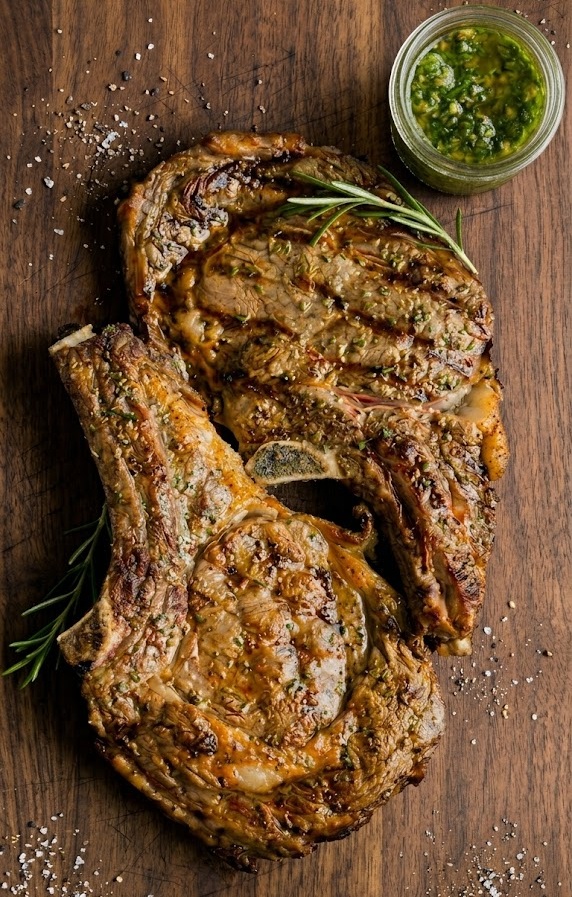
Take the ribeye steaks out of the refrigerator a little ahead of time so they don’t go onto the grill cold. Season the surface of the meat generously and evenly with sea salt, black pepper, and finely chopped fresh rosemary. You can grill them right away or cover them with plastic wrap and let them marinate in the fridge for up to 2 hours.
2. Grilling
Preheat your barbecue to medium-high heat. Place the beef ribeyes directly onto the hot grates, close the lid, and drop the heat to medium. Cook the meat for about 4–5 minutes per side if you prefer a rare or medium-rare finish. Turn the steak only once using tongs.
3. The Secret to Resting
Once you reach your desired internal temperature, remove the steaks from the grill. Place them on a cutting board and cover them loosely with a sheet of aluminum foil folded like a tent (do not wrap tightly). Let the meat rest strictly for 15 minutes before slicing against the grain and serving.
Indoor Grilling Method (Stovetop Cast-Iron Skillet)
If the weather doesn’t permit firing up the barbecue, you can replicate an impeccable steakhouse sear using a heavy-duty stovetop cast-iron skillet (bistecchiera):
The Smoking Hot Pan Trick:
Heat the dry skillet over your largest burner for 5–8 minutes until it lightly smokes. The pan must be scorching hot to activate the Maillard reaction (the delicious outer crust).
Indoor Cooking Times:
Lay down the seasoned steak and cook without moving it for 3–4 minutes per side over high heat. Do not use a lid, or you will trap steam and create a boiled-meat effect.
Ventilation:
Because this is a thick, marbled cut, cooking it will produce some smoke—turn your kitchen hood fan up to maximum power! Even indoors, a 15-minute rest under foil with the heat turned off is mandatory to redistribute the juices.
Ingredient Notes & Substitutions
Beef is incredibly versatile, and it’s easy to substitute cuts based on availability and budget. Any cut that is roughly 1.2 inches (3 cm) thick will work perfectly. We recommend a Ribeye (Costata), considered the queen of the grill due to its intramuscular fat. Alternatively, you can opt for a bone-in T-Bone, a savory Strip Steak (Controfiletto), or a Sirloin. If you’re looking for a more budget-friendly yet flavorful option, chuck-eye steak is an excellent technical substitute.
Storage & Make-Ahead Tips
A steak is always best enjoyed hot and freshly rested. If you have leftovers, store them in an airtight container in the refrigerator for a maximum of 2 days. You can eat it cold sliced thinly in a salad or quickly reheat it in a pan over very low heat with a pat of butter, taking great care not to overcook it.
Frequently Asked Questions (FAQ)
Why does the meat need to rest for 15 minutes after cooking?
During cooking, muscle fibers contract, pushing the juices toward the center. Resting off the heat allows the fibers to relax and the juices to redistribute evenly throughout the steak. If you cut it right away, all the liquid will flood the cutting board, leaving the meat dry.
How do I regulate the temperature for various degrees of doneness?
For Rare / Medium-Rare: Remove the meat from the grill when your thermometer reads between 130°F–140°F (54°C–60°C). During the resting phase, it will climb to the perfect 143°F (63°C) final target.
For Medium / Well-Done: Remove it from the heat at 145°F–149°F (63°C–65°C) to stabilize around 160°F (71°C) final.
Can I use regular table salt instead of sea salt?
Yes, but flaky sea salt or coarsely crushed sea salt provides a crunchy texture on the surface of the meat that pairs much better with thick, steakhouse-style cuts.
Varied doses for servings