

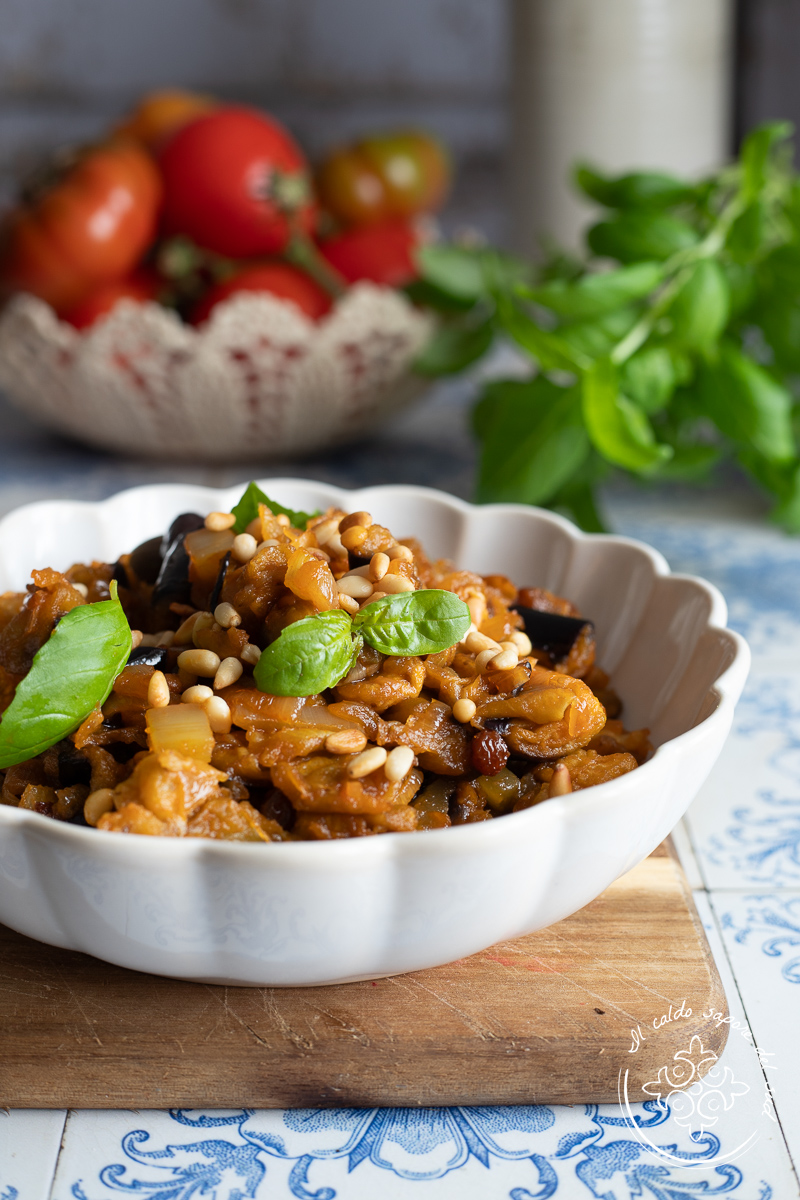
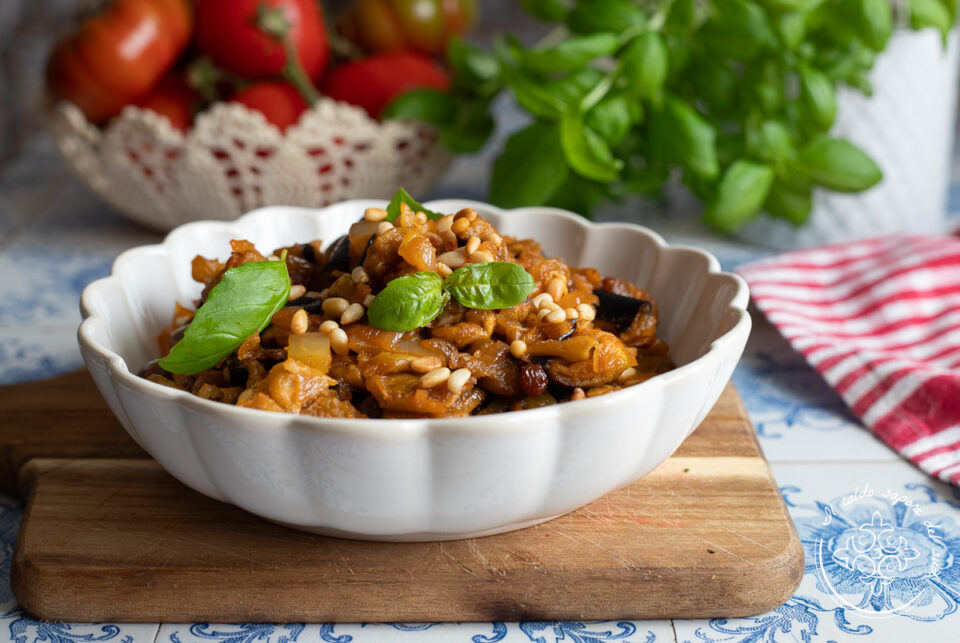
Authentic Sicilian Eggplant Caponata is a cornerstone of Sicilian cuisine
and one of the most iconic sweet and sour dishes of the island. This Palermo-style recipe follows the classic nonna’s tradition and features fried eggplant as the true star of the dish, just as tradition dictates. Alongside specialties such as Sicilian fried dough with anchovies and ricotta, Sicilian Broccoli Scacciata and Tradictional Sicilian Cassata cake,
eggplant caponata represents the soul of Sicilian home cooking. Naturally vegan and vegetarian, it is traditionally served as a side dish or appetizer and is loved for its bold yet perfectly balanced flavors.
Caponata has ancient roots in Sicily, and although it carries the same name throughout the island, its ingredients vary from province to province. Each local version reflects regional traditions while preserving the unmistakablesweet and sour (agrodolce) flavor, created by fried onions, eggplant, vinegar, and sugar. Depending on the area, caponata may include peppers, potatoes, or fresh tomatoes instead of tomato paste.
This recipe focuses on the Palermo-style eggplant caponata, the most classic version, where eggplant takes center stage. It is just as beloved as the Catania-style caponata, which typically includes bell peppers. You can find that variation on my other blog in the recipe Sicilian caponata with peppers.
According to tradition, the name caponata is believed to derive from “capone”, the Sicilian word for dolphinfish, a prized fish once served on aristocratic tables and dressed in a sweet and sour sauce. Over time, common people replaced the fish with eggplant, a more affordable and abundant ingredient. While the true origins of caponata remain uncertain and surrounded by legend, its cultural and culinary importance is undeniable.
If you love Sicilian cuisine, this authentic fried eggplant caponata Palermo-style is a must-have recipe for your collection. Follow me into the kitchen and let’s discover together how to prepare this timeless Sicilian classic.
Before we begin, if you’d like to explore more traditional Sicilian recipes, you can visit my Italian blog. To stay up to date with all my latest recipes, follow me on facebook and instagram.
Ingredients to make Traditional Sicilian caponata
Tools
Steps to make Traditional Sicilian caponata
How to make Traditional Sicilian caponata
Peel the aubergines, but not completely. Leave a few strips of their skin instead: they will give the caponata flavor but not darken it too much. Cut them into small pieces, collect them in a colander, sprinkle with a couple of tablespoons of salt and wait for them to drain some of their vegetation water. After about thirty minutes, rinse them thoroughly with clean water or under running water, to remove the excess salt. Squeeze them with your hands and dab them thoroughly with a towel.

Then dip one half in a pan with already hot seed oil and fry them until golden brown. It could take up to 30 minutes. Once cooked, collect them with a slotted spoon, place them on a colander and let them drain the excess oil. Then proceed to cook the second half of the aubergines.
Avoid cooking the eggplants in one step, the oil may cool and you would end up boiling the eggplants in the oil, rather than frying them.

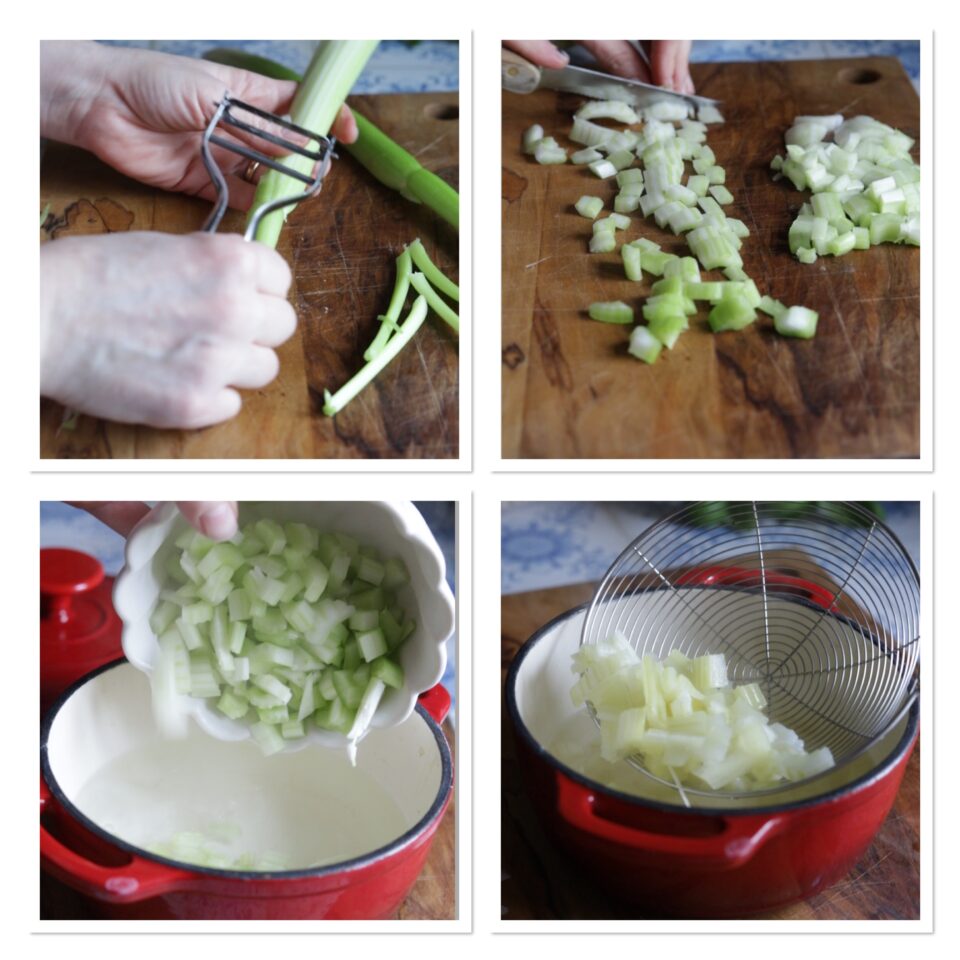
While the aubergines are frying, cut the celery and blanch it in water and vinegar
It’s time to dedicate yourself to the rest of the preparation. Slice the onions after peeling and rinsing them, add a good drizzle of olive oil and let them brown over medium heat in a large pan. The onion will need to cook and caramelize, so stir often and be careful not to burn it; if necessary, add a little water to bring to a boil. Then add the celery, tomato paste, vinegar, sugar, half a glass of water, salt, desalted capers and raisins, mix everything together and place on the stove. Continue cooking until the vinegar has completely evaporated and has released its pungent flavor.

Combine the eggplants and olives (I add them as a last step, so they don’t soften too much, but you could also add them to the dressing from the previous step).

Toast the pine nuts in a pan, gently and without burning them, this way they will be more aromatic. Combine them with the caponata, put everything on the stove over a high flame for 5 minutes (you may want to add a little’ of water if everything turns out too dry for your taste) and the caponata is ready.
Let it rest for at least an hour before enjoying it. The more caponata rests, the better it is.

Storage Tips, Notes and Variations
Store the caponata tightly covered in an airtight container in the refrigerator for up to 5 days. It keeps very well.
You can also preserve it by packing it into vacuum-sealed jars.
From here, you can go back to HOME and discover the new recipes!
Varied doses for servings